Xero
Product Design Manager · 2021–2023
Accounting mobile app for Sole Traders
I managed a team of designers in the delivery of a new native mobile app. Xero Go is a new business tracking tool for sole traders and their advisors that allows them to quickly and easily record their financial transactions.
Summary
Context
As Product Design Manager for Xero Go, a new mobile app helping sole traders track income and expenses and get tax-ready, I was tasked with scaling and leading the design team across two regions for a simultaneous UK and Australia launch.
What I did
To do this, I scaled and led the team across three areas - people leadership (hiring, growth and wellbeing), stakeholder management (product strategy, design vision, resource management and workshops) and design leadership (JTBD research, customer interviews, a product rebrand and a new scalable design system).
Result
I grew the team from two designers to ten with 100% retention and two promotions, embedded research and data gathering processes that earned design a seat at the leadership table, and delivered the design on target for the July launch.
Context
The objective was to design a brand new mobile app that lets
Sole Traders easily record their business income and expenses,
helping them get organised and ready to submit their tax return.
In a nutshell, Xero Go is a new business-tracking app for the
self-employed and their advisors that lets them record financial
transactions quickly and easily, so they can spend less time on
admin and more time doing what they love.
When I joined in April 2021, the team consisted of three PMs,
one EM, a product marketer and a BA. Engineering was comprised
of five pods with 75 developers in total. To start with, the
design team was just myself (Product Design Manager) and two
Product Designers. However, I quickly scaled the team to a total
of 10 product desigers across two regions as we were planning on
launching our app in the UK and Austrlia simultaneously.
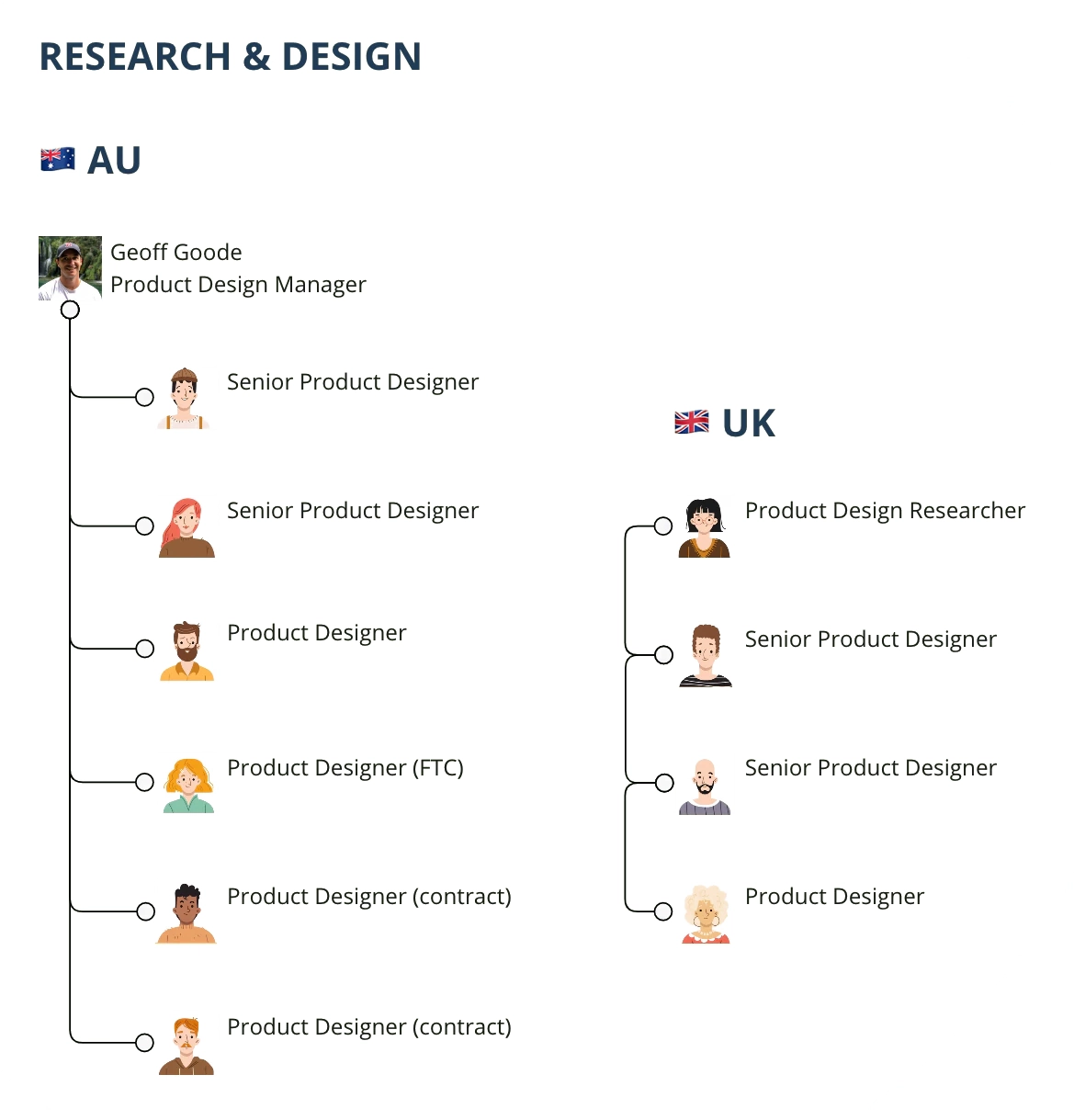
Research & Design across AU and UK.
My Role
My role sat across three key areas. People leadership meant overseeing headcount and team growth, running 1:1s and developing my designers’ careers. Stakeholder management meant inputting design strategy, facilitating workshops, being the voice of the customer to the wider business, and monitoring, managing and communicating the team’s capacity. And design leadership meant mentoring designers, ensuring design quality, and keeping design tied to research.
People Leadership
On the people side, I owned skill mapping, hiring, onboarding and retention, gave feedback regularly to build a strong feedback culture, and supported each designer’s development, growth and wellbeing through PDPs and regular 1:1s, all while keeping the team aligned to our overall design strategy and the company’s goals and values.
This also included growing the Xero Go design team from two designers to ten across AU and UK to meet the resourcing needs required for a multi-region product launch. I also helped two team members earn promotions in the last year, and served as a ‘Wellness Champion’ for all Xero employees by completing my 'Mental Health First Aid' qualification.
Stakeholder Management
I partnered with stakeholders across product and engineering, created and maintained documentation, developed and supported an asynchronous communication model, and contributed to the product vision by helping define strategy, objectives, priorities and future iterations.
Along the way I facilitated several workshops (see below) to align all product stakeholders on a single product vision, and created and maintained the design artefacts that made effective async communication and transparency possible across teams and regions.
Dependency Teams
This giant project also depended on a network of other teams and their input, agendas and requirements and so a big part of the job was aligning their roadmaps with ours – constantly communicating, advocating for our priorities and pushing for decisions against tight deadlines. Dependencies included Identity, MFA, Bank Feeds, Invoice, Tax Compliance, Legal, Brand and Go To Market.
Design Leadership
As a design leader I led research projects such as JTBD and usability testing, and challenged the team to deliver timely, high-quality outcomes centred on customer needs. I supported collaboration between designers and stakeholders, shared and standardised best practices for research and design, and helped improve the culture of both the cross-functional team and the wider design org.
Working with the design leadership team also allowed me to help improve the design org’s culture by introducing ‘Pecha Kuchas’ to portfolio all-hands and adding an org-wide design crit. I also worked with other managers to create standardised processes, from an onboarding Asana board for new hired to interview questions and a growth framework. I also arranged regular ceremonies for designers to collaborate with one another and with external stakeholders.
“Since he joined he has brought such a positive impact to the design team. He has also been able to represent the team on the table where designers have not been able to be before.”
Artefacts (Design Team Kanban Board)
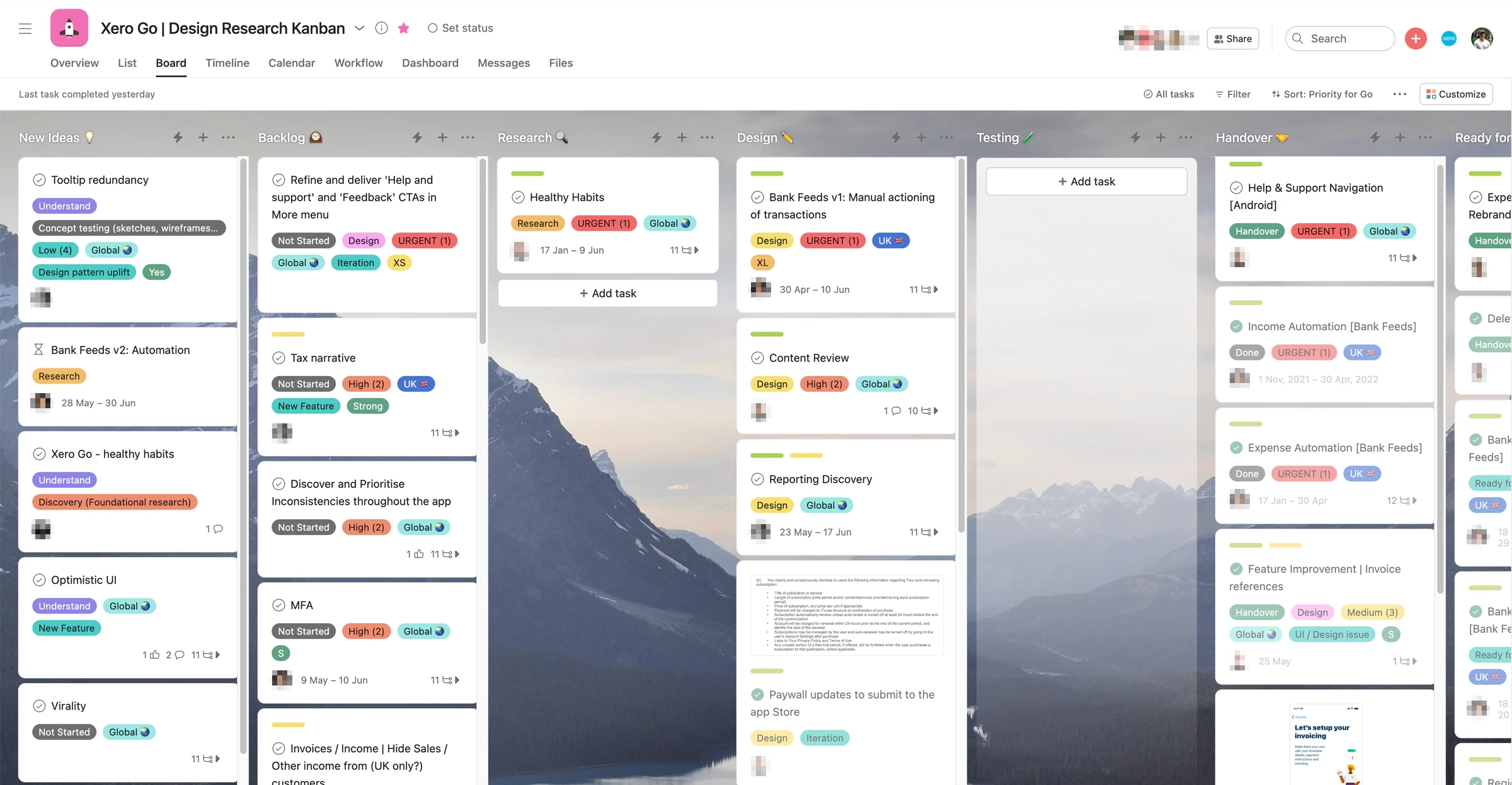
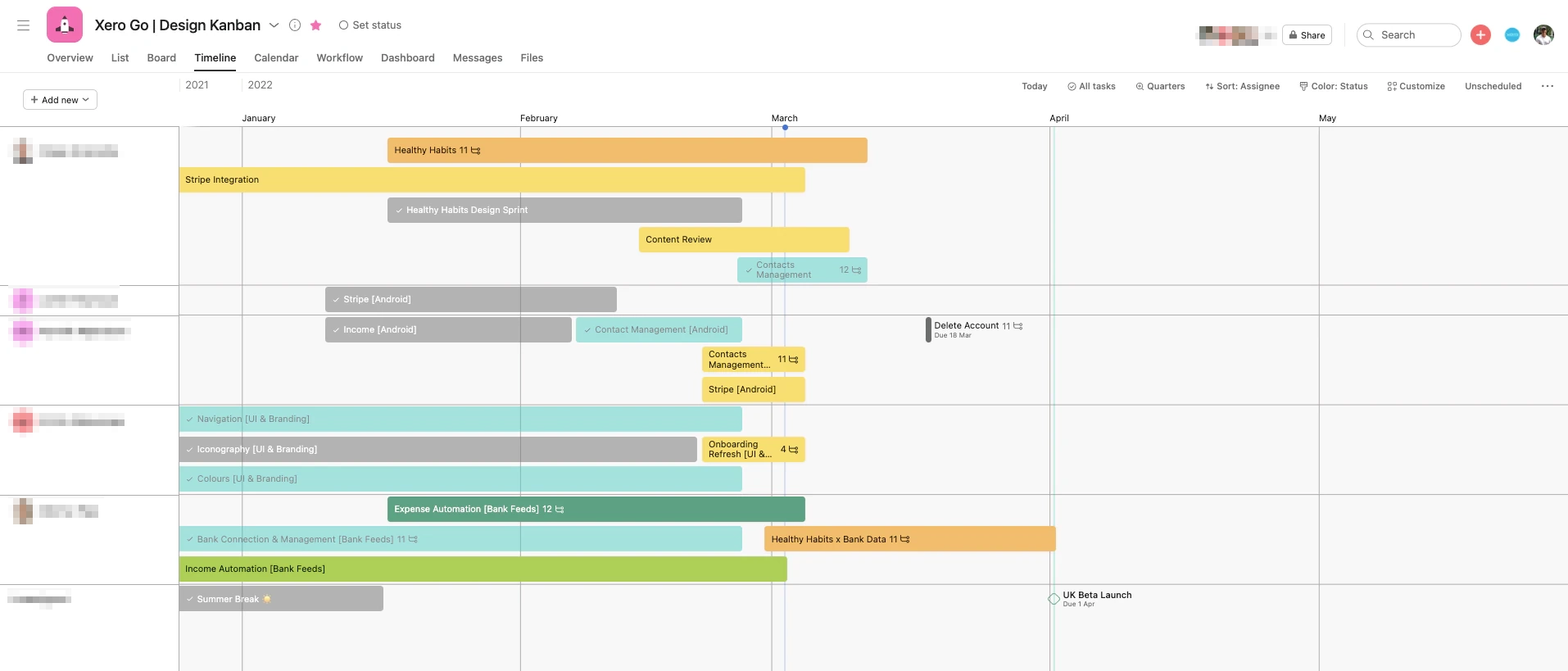
Our Asana kanban board tracked the progress of design and research tasks and made the design process visible to us as a design team, but also to cross-functional stakeholders. It gave product owners a way to raise and prioritise design work, gave everyone transparency into the design team’s capacity, integrated with other program-level boards, and promoted cross-region collaboration, all while keeping the agreed design tasks visible in one place.
Artefacts (Confluence Documentation and Async Comms Model)
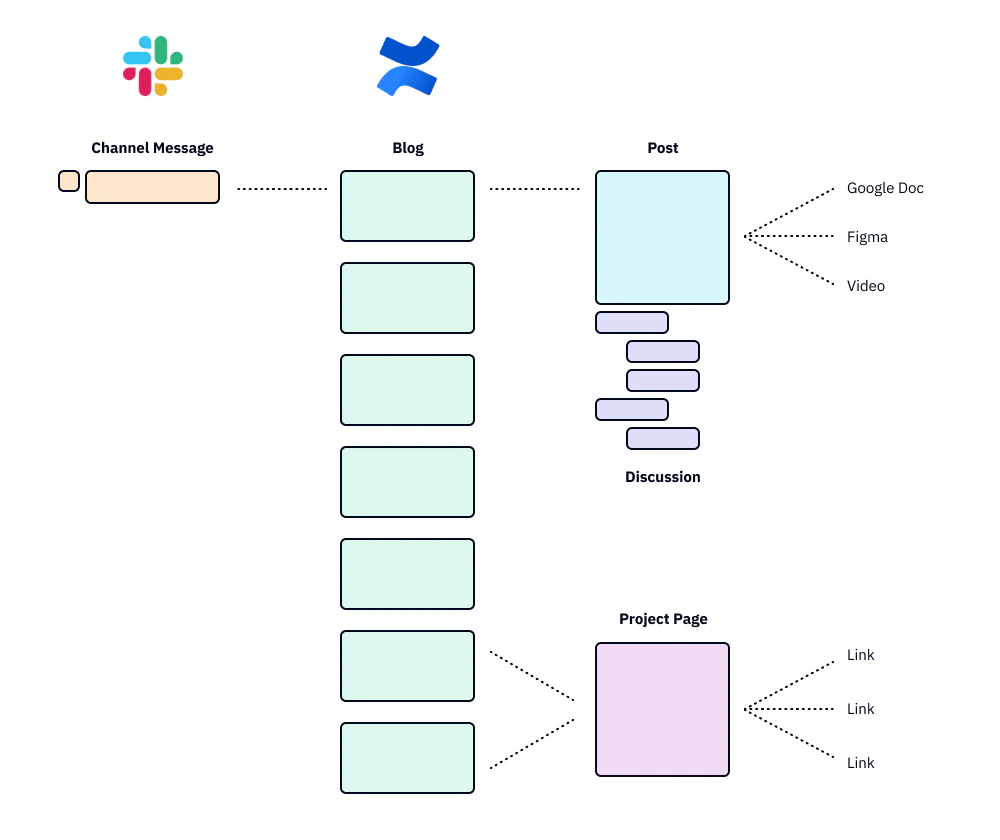
A standardised set of rules and expectations round communication solved a specific set of pain points - too many calls, interruptions to focus time, timezone-crossing communication, and siloing. The solution was a lightweight publishing model consisting of Confluence blog posts to share updates on work in progress, project pages act as more permanent reference points, and Slack to simply signal when something new has been posted.
Solving Customers Problems - Jobs To Be Done (JTBD)
We conducted 18 in-depth interviews with existing Sole Traders across Australia and the UK, to understand how they currently solve their problems and where their needs aren’t being met. These are shown in the diagram below.
Methods and skills used:
Interviewing

Empathy Mapping
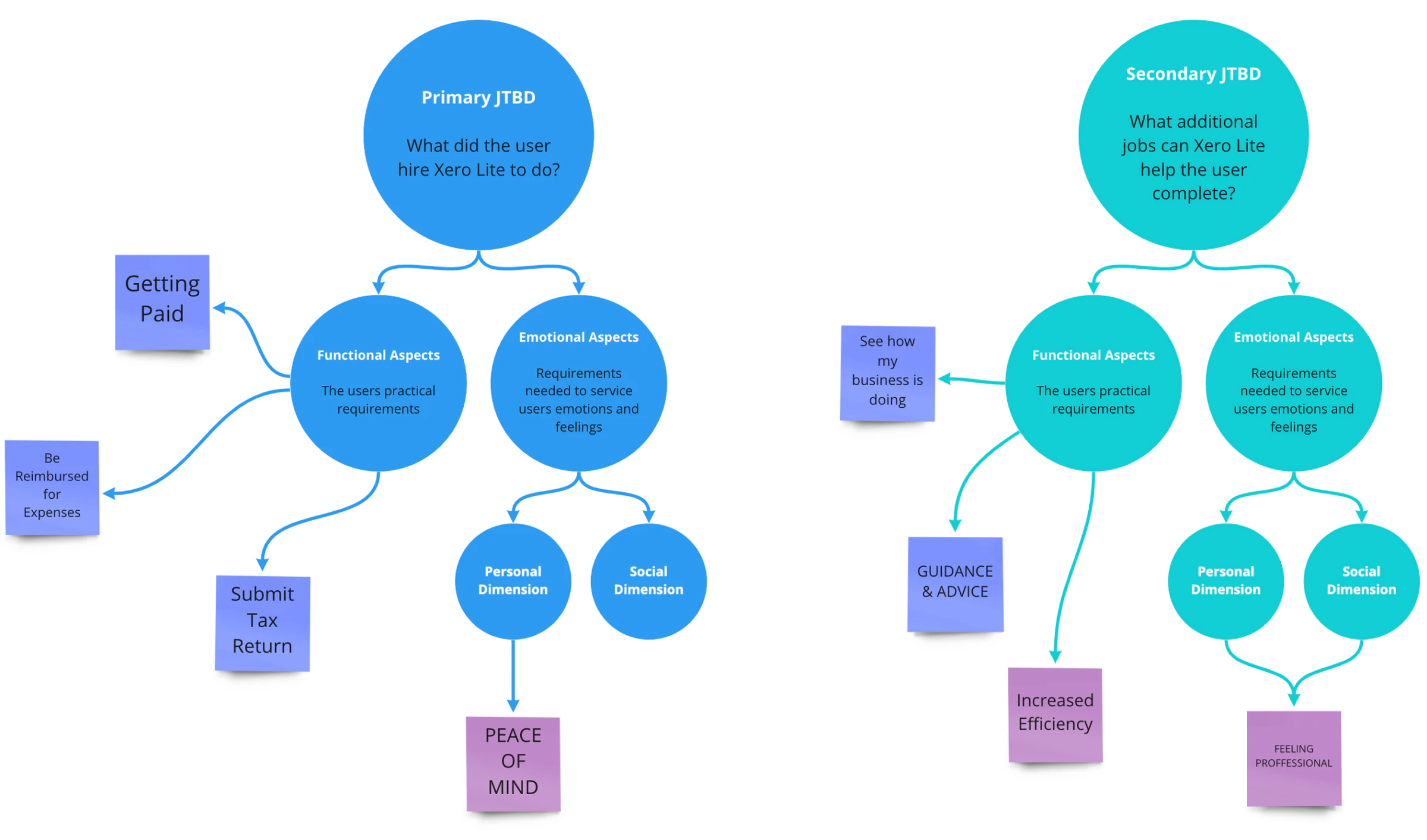
Primary and secondary Jobs To Be Done, split into functional and emotional aspects.
How Might We…
From there we used two ‘how might we’ statements to guide our objectives. How might we motivate sole traders to adopt better processes and take control of their financial position, and how might we give them a simple tool to get business admin done quickly – without having to learn accounting?
Workshops (Hooked Model)
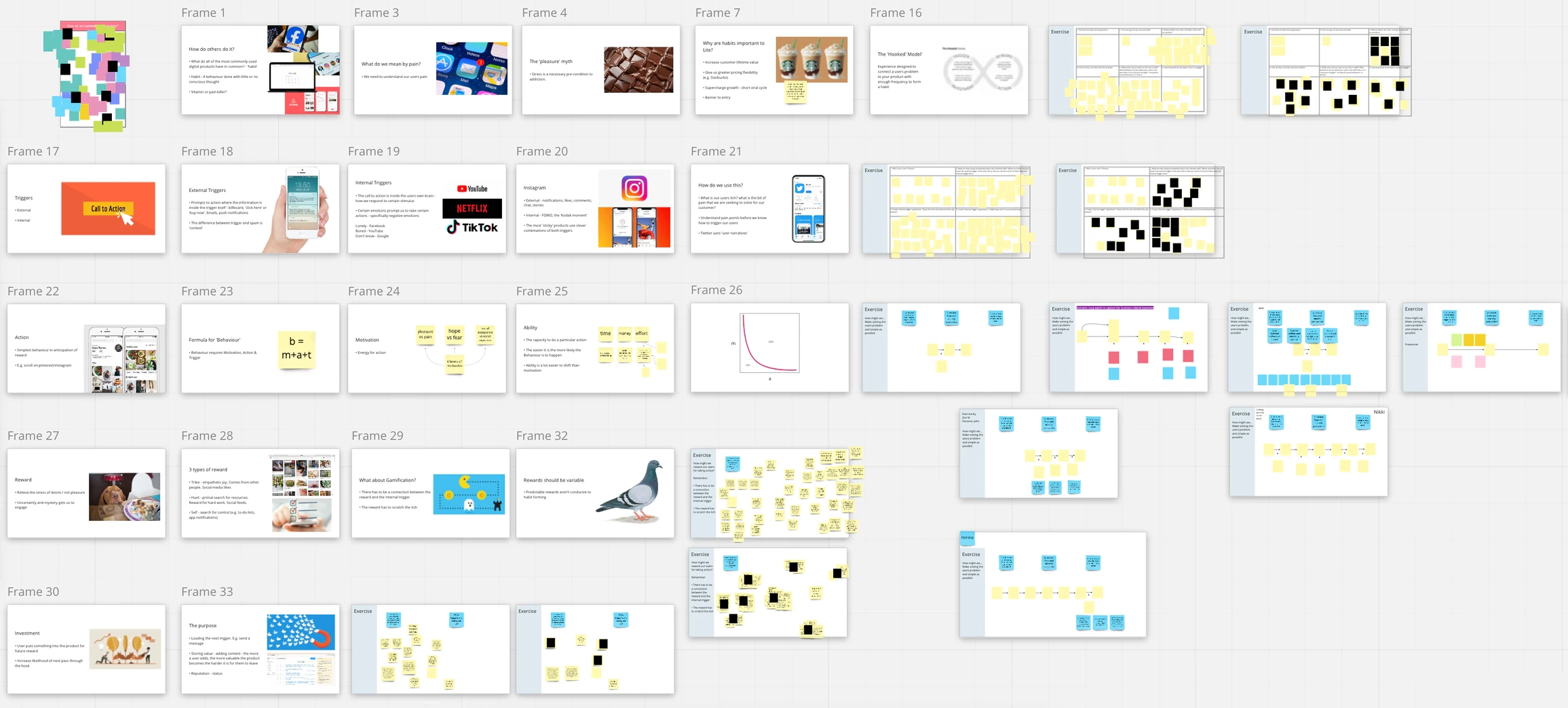
To maximise engagement with the product, I decided that it would be beneficial to introduce some 'healthy habit' forming features. Ultimately our goal was to encourage our users to add their expenses and invoices regularly, rather than wait until tax time and feel stressed that they have to do it all at once. To help this, I ran a workshop around the 'Hooked model' to collaborate with, align and influence stakeholders from across the business on the subject of behavioural design. Together we looked for ways to differentiate the product from competitors and to help Sole Traders form healthy habits and adopt best-practice record keeping.
“One of the best internal workshops I’ve ever attended. I loved the mix of science and design!”
Workshops (Design Sprint)
I also facilitated a 'Google Design Sprint' with the aim of aligning product, marketing and engineering stakeholders on the best direction, produced several concepts to test and learn from, and the process also doubled as a genuinely good team-bonding experience.
“…a strong understanding of design theory and obsession with customer insights and data led decision making.”
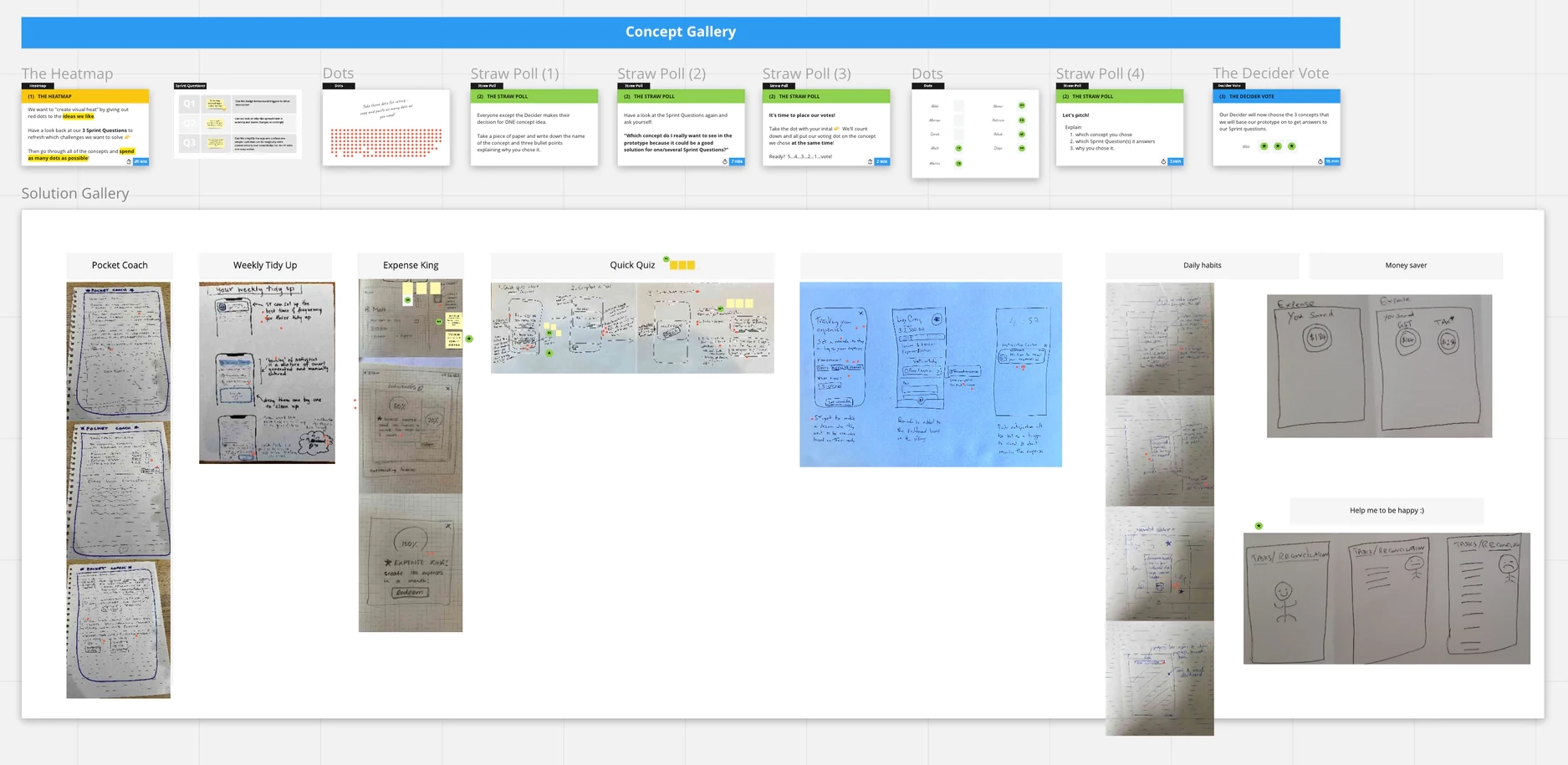
Concept gallery and solution sketches from the Design Sprint.
Product Rebrand
As the new app we were designing was targetted at a alightly different market to our regular Xero customers, I led a product rebrand from new brand guidelines and a moodboard supplied by the brand team, adapting the product to appeal to a new customer segment. That meant hiring a designer with a UI focus, finding ways to bring the new branding into the product itself (e.g. colours, icons, patterns and tone-of-voice) and making the necessary adjustments to the product roadmap.
Design System
To suppor the rebrand, for the sake of efficiency, we also spun up a mini design system. This also meant answering a series of questions about how to create reusable components not just for our designers but for those in other teams, which tokens could be customised for the new brand, how to contribute back to the larger mobile design system and how to decide when (and when not) to create a new component.
Methods and skills used:

Information Architecture

UI Design
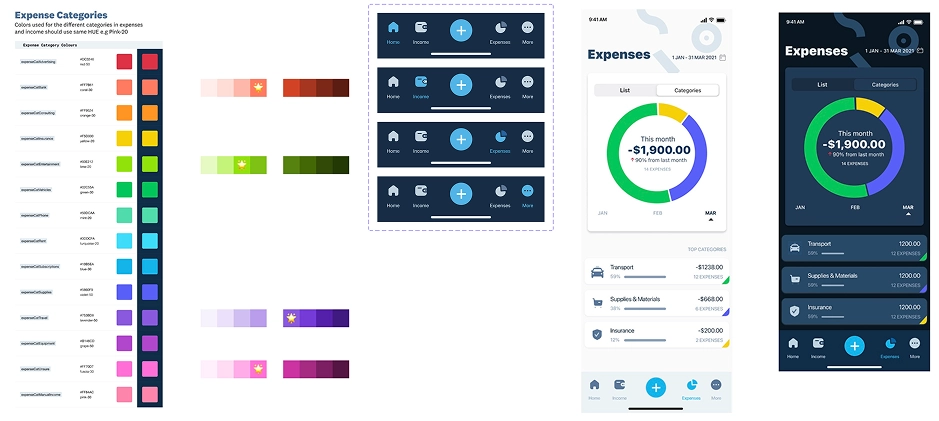
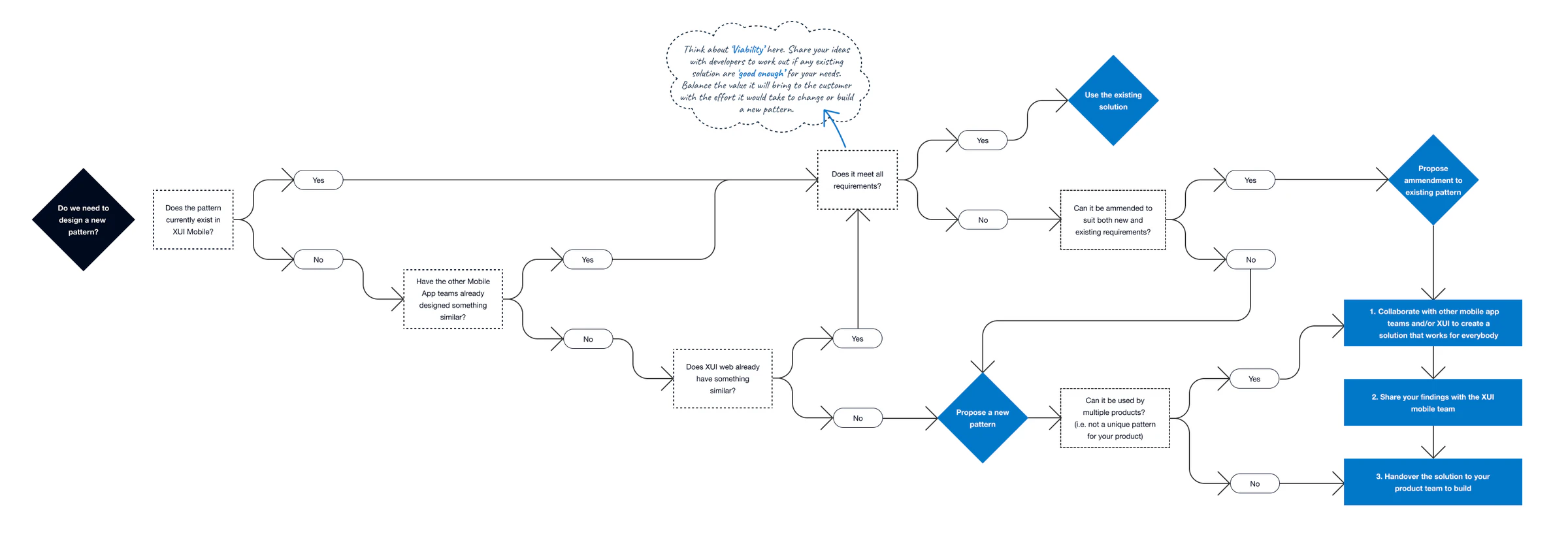
Decision tree for when to reuse, amend or propose a new pattern.
Product Launch
Design was delivered and on target to launch in July. With launch in sight, the next steps were to set up documentation that conveys analytics back to stakeholders and recommends iterations, tidy up the Figma files and start reducing some of the innevitable design debt incurred by the tight deadlines. To do this, I reorganised the team into pairs to partner with dev pods, achieve parity across platforms, and continue building features for the next release.
Lessons Learned
A few lessons stuck with me during my time at Xero. With the benefit of hindsight, I’d plan further ahead and try to better predict the need for additional designers and start hiring processes sooner. I’d also take better care of myself, because it’s hard to look after others when you’re burned out, and staying well is better for everyone. I’d lean harder on async communication, since not every conversation needs to happen in a meeting. And I’d pick my battles. Knowing when to meet in the middle and be a good partner is as important as advocating for the best experience.