Toyota
Lead Product Designer · 2020
Native apps for the next generation of in-car infotainment
I led the research and design of suite of new native applications for Toyota’s next generation of in-car infotainment systems.
Summary
Context
Over twelve weeks I led the research and design of a suite of native apps for Toyota’s next-generation in-car infotainment, aiming to differentiate the product and make the vehicles more attractive to buyers.
What I did
I interviewed 20 drivers using the Jobs-To-Be-Done framework, affinity-mapped and prioritised their problems against what the in-car system could feasibly solve, facilitated an ideation workshop, then validated demand cheaply through ‘pretotyping’ experiments (including a Fake Door campaign) before prototyping and user-testing the strongest concepts in-situ from the driver’s seat.
Result
The experiments and in-context testing let us prioritise concepts by genuine customer desirability rather than opinion, and I iterated the validated ideas into the final concept UI for the car’s head unit.
Project Summary
Over a period of 12 weeks our goal was to define, design and validate a suite of new native applications for the next generation of Toyota’s in-car infotainment systems in order to create product differentiation and make the vehicles more attractive to customers.

Discovery
I used the ‘Jobs To Be Done (JTBD)’ framework to interview
customer and understand thier needs and sorted them into
primary/secondary and social/emotional. In total, the design
team interviewed a total of 20 car drivers from varying
demographics. I then used an affinity map to identify and
categorise the most common problems that drivers experience
before isolating those problems that were feasible to solve
using the technology available, i.e. the in-car system. I also
researched solutions from other car manufacturers in order to
identify how we might differentiate our product from
competitors.
Methods and skills used:
Interviewing

Competitor Analysis
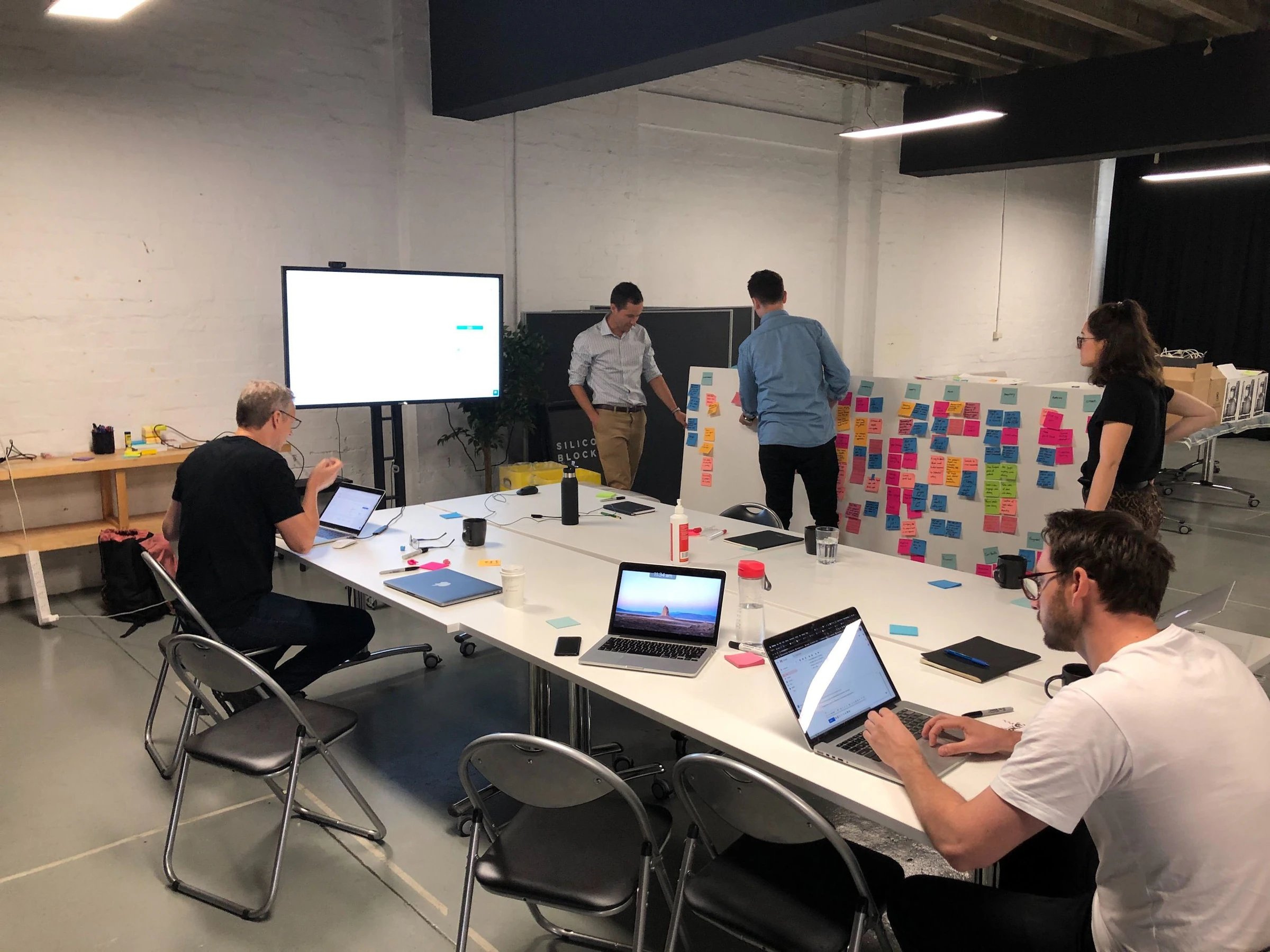
Many potential users and industry experts were interviewed to try and understand the users' needs.

Ideation
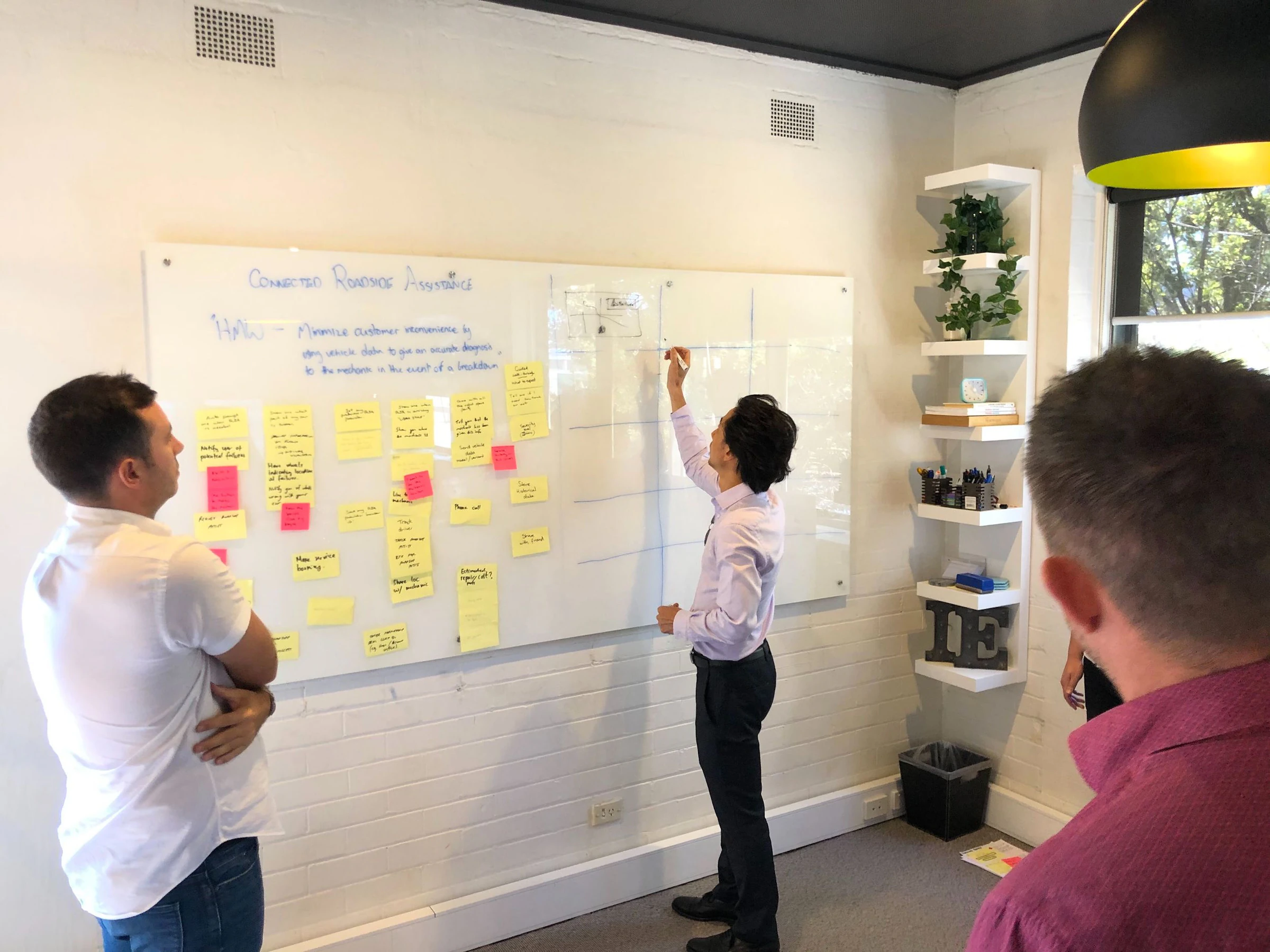
With a list of problem statements defined, I then facilitated a
workshop with client stakeholders in order to ideate solutions
to the customers problems we identified earlier. By working
individually and them coming together to share and vote on our
favourite concepts, we were able to generate several ideas in a
short space of time and also agree on a path forward as a
group.
Methods and skills used:
Workshop Facilitation
Wireframing


'Pretotyping' Experiments
In order to quickly and cheaply validate the concepts that the
team created, we ran a series of 'pretotype' experiments.
Pretotyping allows the team to more accurately gauge the true
desirability of an idea from the point of view of the customer
by asking them for 'skin in the game' - a small investment such
as personal data that goes some way to proving that the concept
is of genuine interest and not just something that customers
'say' they want in an interview.
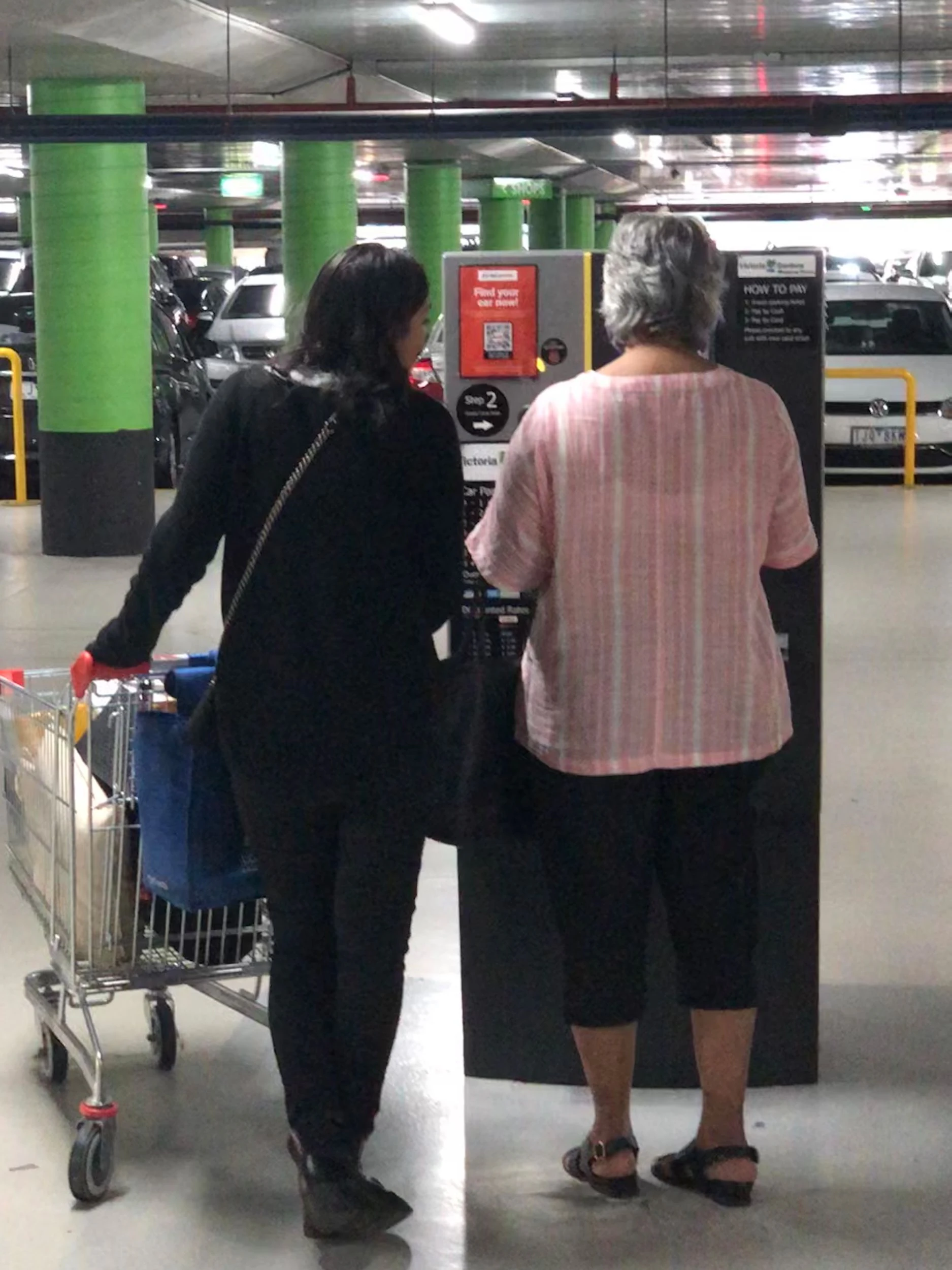
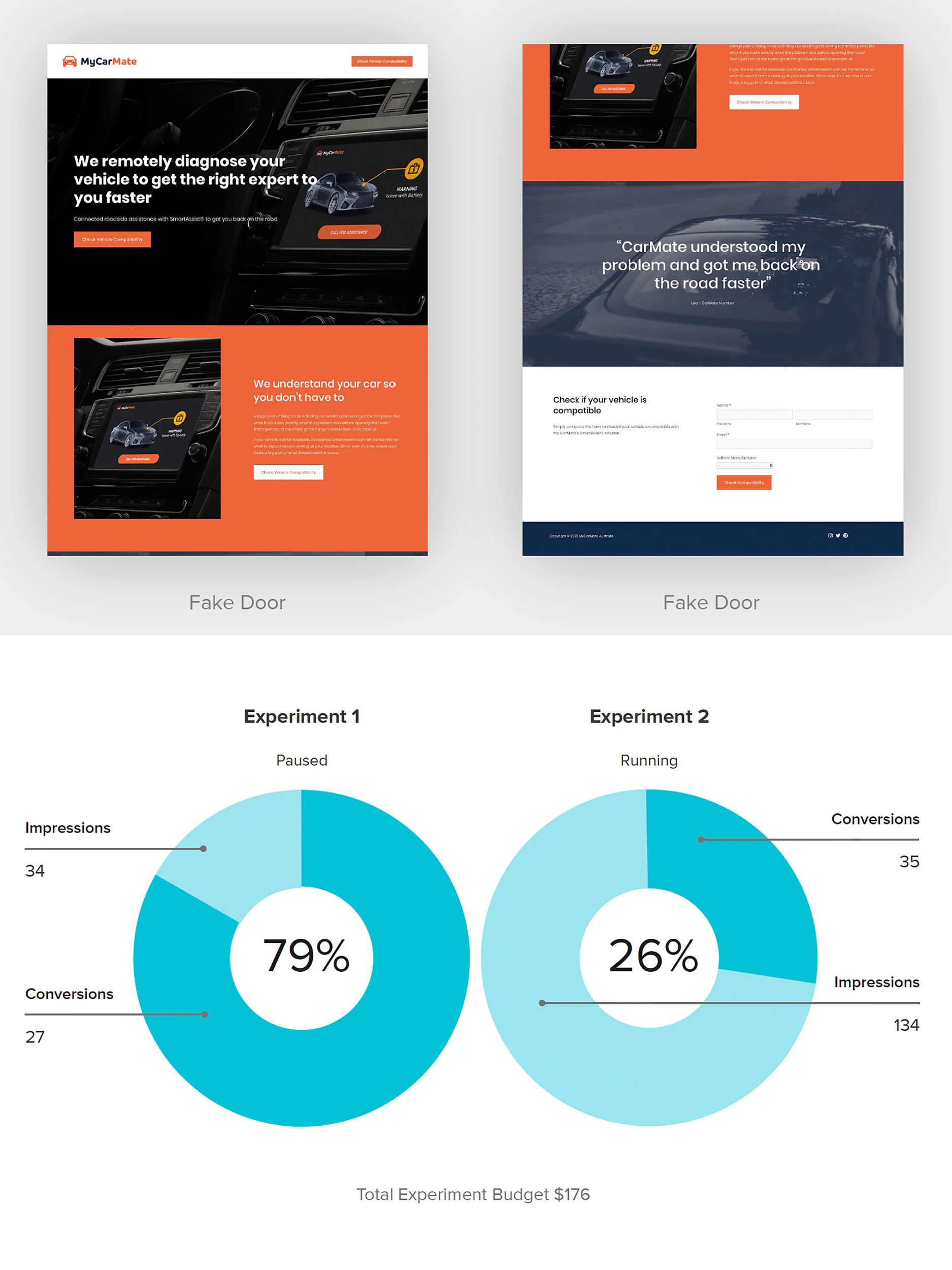
One such experiment was a 'Fake Door', whereby we advertised a
fictional product that allows customers to order and track
breakdown recovery. We used a combination of strategically
placed QR codes, Google Ad Words and a Squarespace landing page
to attract customers and then ask for their contact information
if they would like to learn more about when this product would
launch. The engaement levels of two campaigns (the second with a
slightly higher barrier to entry) are shown in the chart
below:
Methods and skills used:

Data Analysis
Prototyping
Guerilla Testing
Prototype & Test
After tracking and analysisng the results of each experiment, we
were able to prioritise them in order of desirability and create
a series of working prototypes to test with real users in order
to validate the concept further and also test their usability.
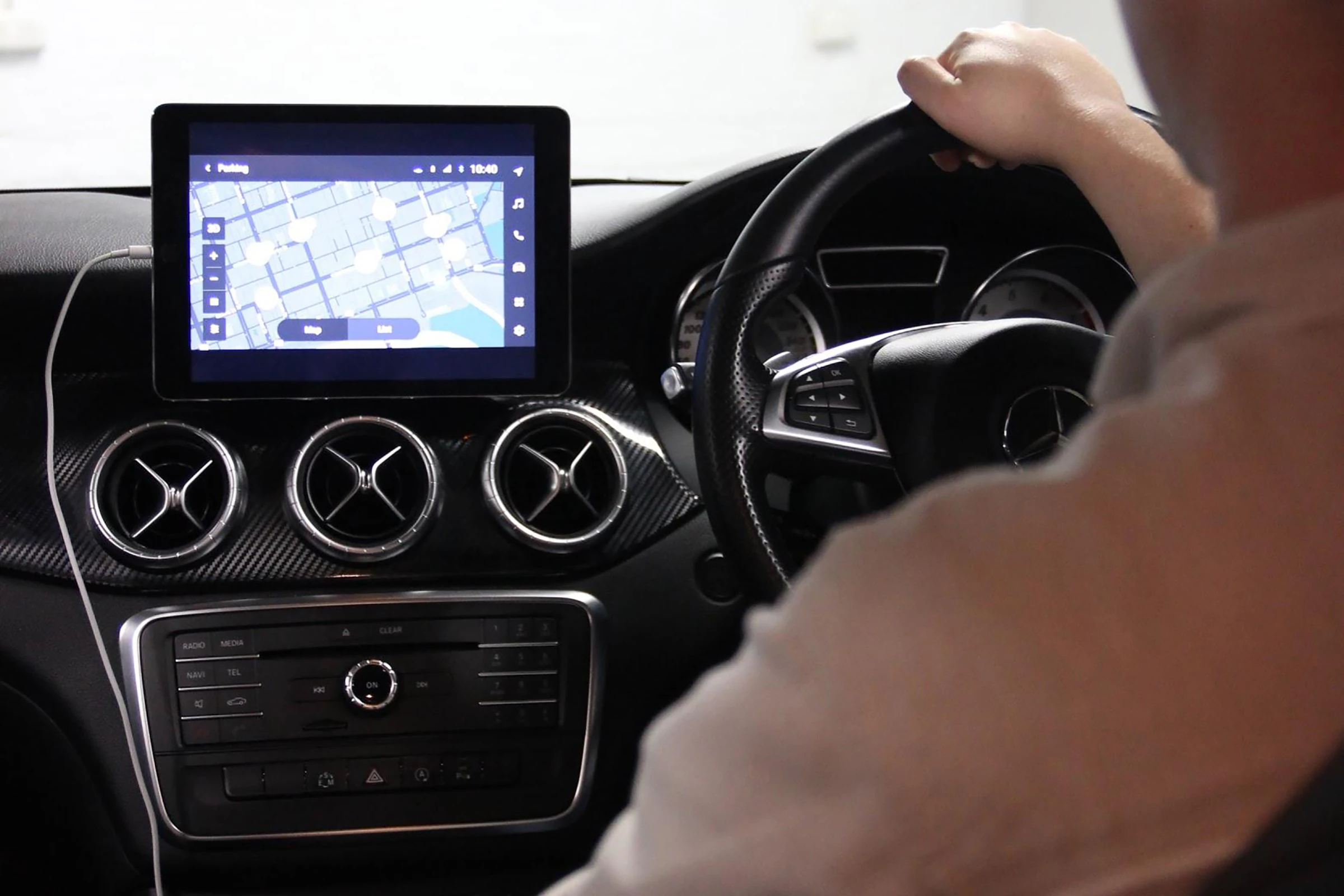
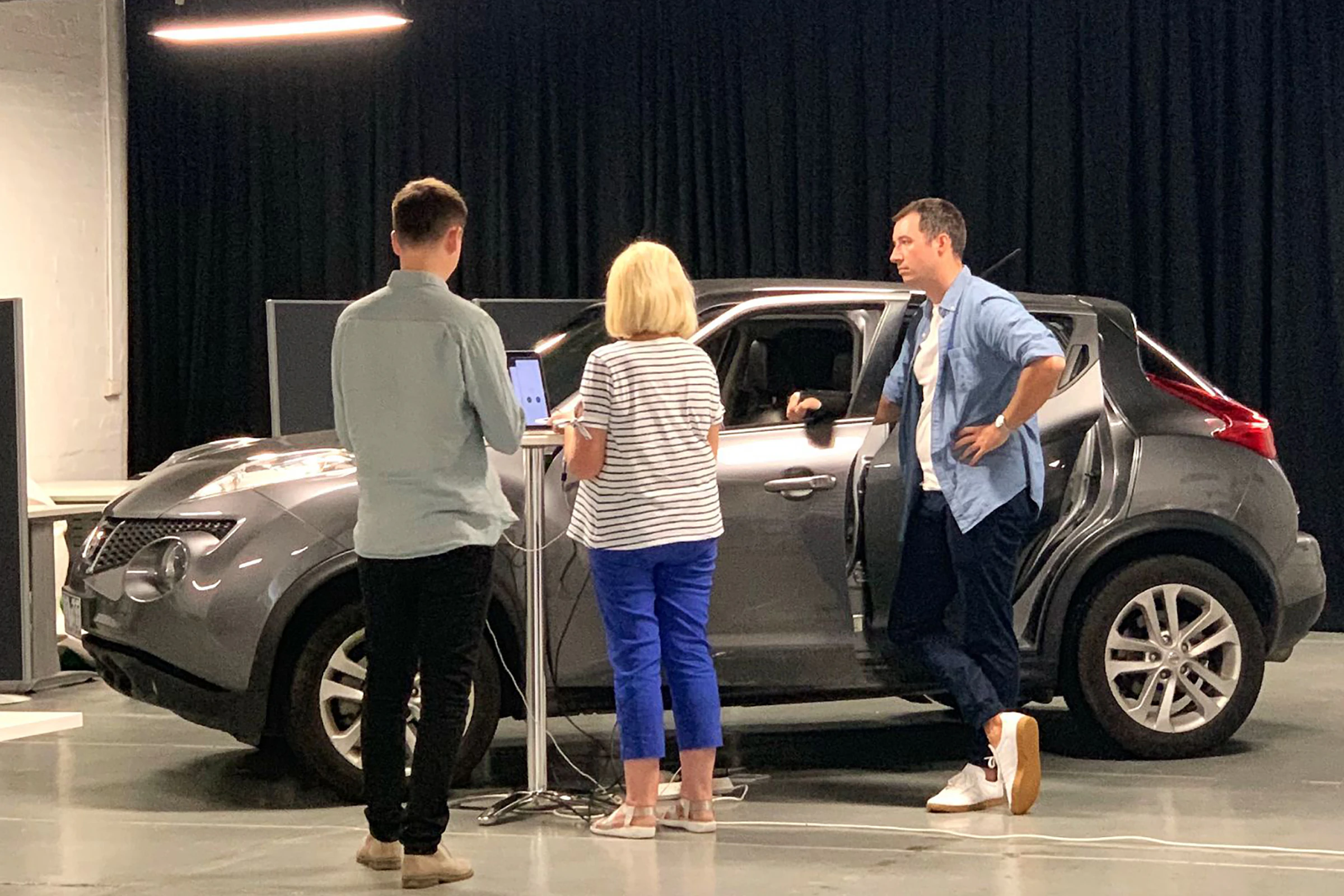
To gather more accurate results we invited customers to test the
product 'in situ' from the drivers seat of a car, using a tablet
to replace the cars head unit.
Methods and skills used:

User Testing
Prototyping
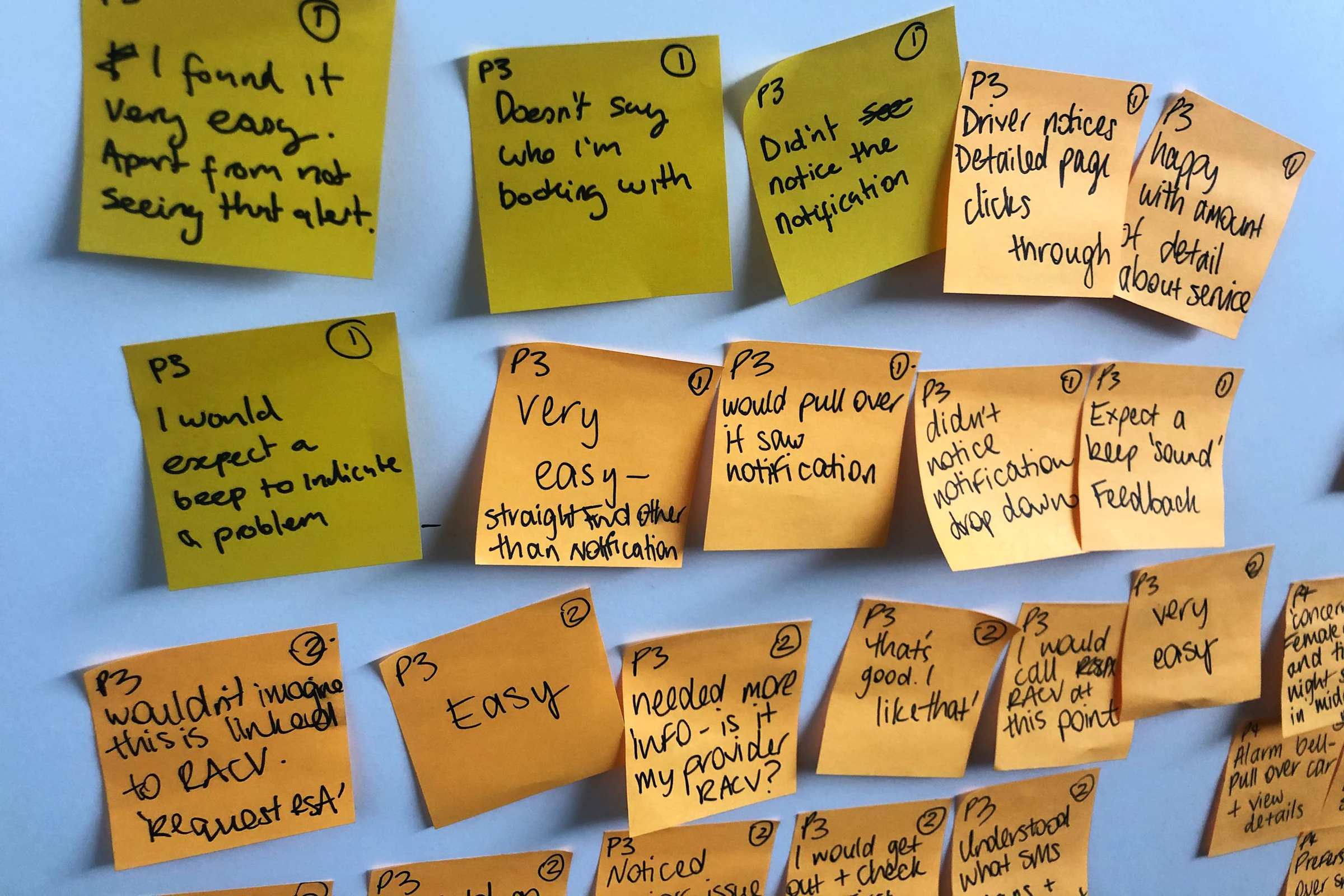

Notes taken after the user testing sessions provided me with feedback and ways to iterate and improve the design before re-testing.
Implementation
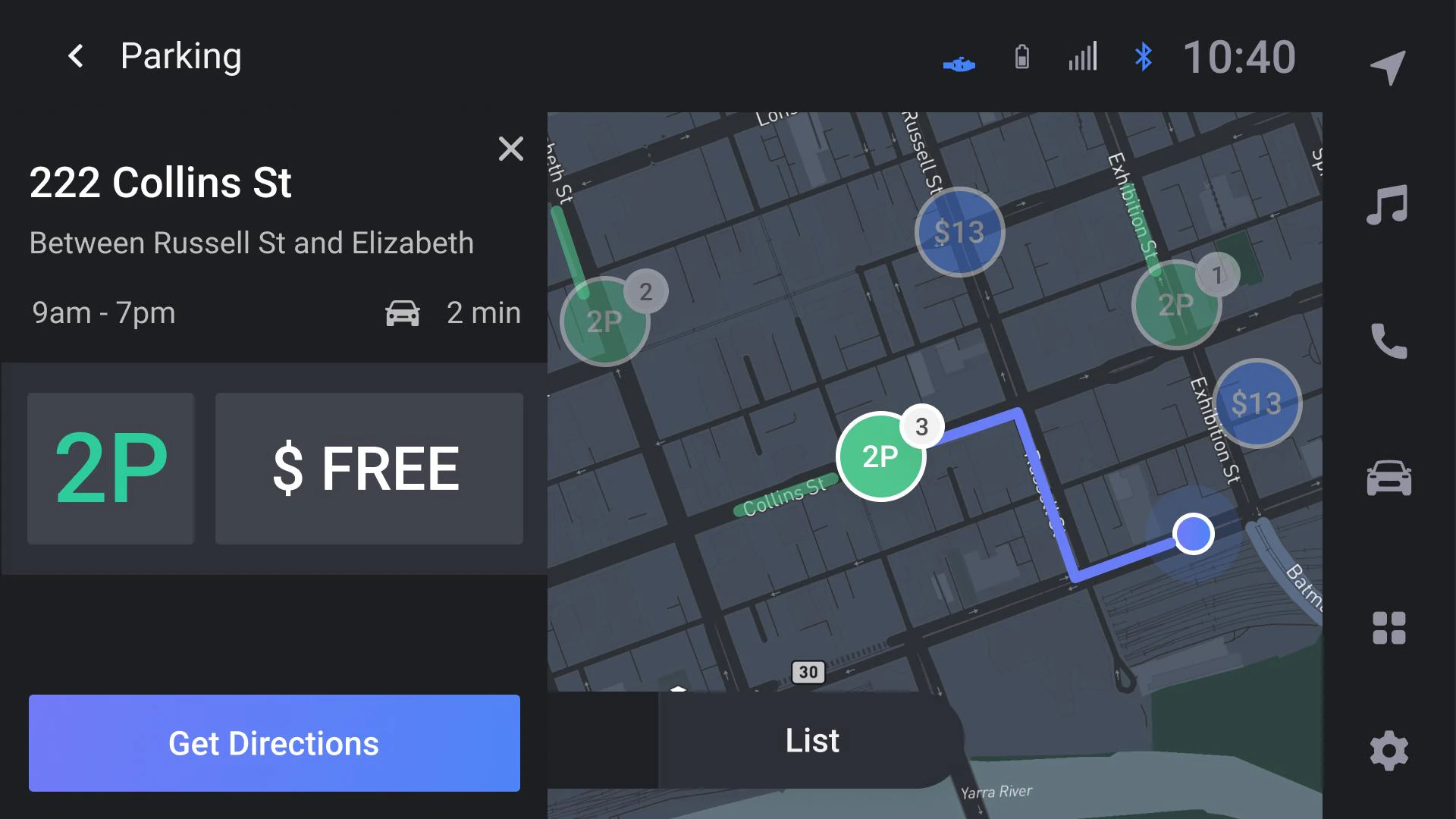
Once testing was complete and feedback gathered and considered,
I iterated the concepts further and created the final concept UI
for use on the car's head unit.
Methods and skills used:

Sketch
UI Design
Prototyping